
Healthcare Career Pathway Model for CNA Training
Submitted By: Eric Crawford
Mendocino - Lake CCD
Website: www.mcoe.us
Type of Practice: Learner Transition
Program Area(s): CTE / Workforce Prep / Pre-apprenticeship
Region: Northern California
Consortia Involved: Mendocino-Lake CCD
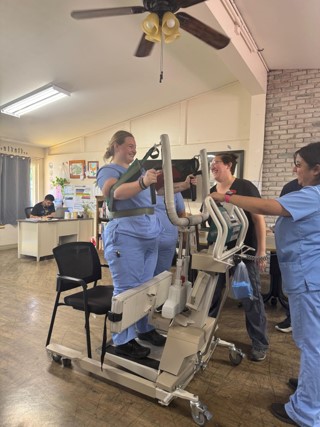
The Program of Practice
Address the shortage of CNAs (direct care workforce); provide an opportunity for individuals with addressable barriers to access healthcare careers. Increase success rate for special populations.
California continues to face a significant shortage of CNAs and entry-level healthcare workers
across long-term care, hospital, and residential care settings. These workforce shortages
contribute to delayed hospital discharges, limited long-term care capacity, and increasing strain
across the healthcare system - particularly as the state’s aging population grows. The California
Department of Aging estimates that one in four Californians will be age 60 or older by 2030,
further increasing the need for a stable direct care workforce. Lake County has close to double the current state average of people aged 64 and older.
The Response
The HCP model uses a comprehensive workforce development approach that integrates education, supportive services, case management, and employer engagement into a single coordinated program structure.
Participants enroll in state-approved CNA training programs delivered through adult schools, county offices of education, and educational partners. In addition to classroom instruction and clinical training, HCP provides individualized supports designed to improve retention, persistence, completion, certification success, and employment outcomes.
Key program components include:
Tuition assistance and coverage of training-related costs
Textbooks, uniforms, equipment, and testing support
Transportation assistance and gas cards
Food resources and emergency support
Childcare and emergency stipends
One-on-one case management and student navigation
Academic coaching and certification preparation
Career readiness and employability skill development
Direct referrals to community resources
Employer engagement and hiring partnerships
The program intentionally reduces nonacademic barriers that often prevent adult learners from completing short-term workforce training programs. Students receive individualized support throughout enrollment, training, certification preparation, and employment transition stages.
HCP also emphasizes strong regional collaboration. Program implementation includes partnerships between adult education providers, workforce development boards, long-term care ombudsman programs, healthcare employers, county agencies, and community-based organizations. This collaborative infrastructure allows the program to align training capacity with local workforce demand while creating direct employment pathways for graduates.
The model is responsive to regional needs while maintaining consistent statewide goals, data tracking, and support structures. This balance allows each county to adapt implementation strategies while preserving core program quality and outcomes.
Recent examples of regional implementation include:
Lake County Office of Education successfully completing its 5th HCP CNA cohort
Mendocino County Office of Education successfully completing its 1st HCP CNA cohort
Expansion of partnerships across multiple counties to strengthen healthcare workforce pipelines in rural, suburban, and urban communities
The Unique Features of the Program
HCP’s success is driven by its comprehensive approach that pairs state-approved CNA training
and certification preparation with wraparound supports and 1:1 case management that help
participants complete the program and successfully enter the workforce. In addition to covering
tuition, textbooks, uniforms, and supplies, these supports include transportation assistance, food
resources, childcare and emergency stipends, case management, academic navigation, and direct connections to community resources and employer partners. Additional supports include “fuel only” gift cards, grocery gift cards, purchases of diapers, on campus food pantry access, meals provided during class and clinical times.
At the Lake County Office of Education, these supports and the reduced financial stress on students have lead to record setting numbers for applications across each cohort. Students have also been more successful in Lake County than other HCP counties, both our rates of retention and passage of the CNA state exam are higher than other counties.
Several innovative features distinguish the HCP model:
Comprehensive Wraparound Support Model
HCP addresses both academic and nonacademic barriers by embedding case management and supportive services directly into the program structure. Rather than expecting learners to independently navigate multiple systems, the program coordinates supports in a centralized and student-centered way.
Equity-Focused Workforce Development
The model intentionally prioritizes access for underserved adult learners and special populations who have historically experienced barriers to career pathway programs. HCP creates opportunities for economic mobility while diversifying the healthcare workforce.
Regional Cross-Sector Collaboration
The program leverages partnerships across adult education, workforce development, healthcare employers, ombudsman programs, and community-based organizations. This collaborative structure strengthens recruitment, student support, and employment placement outcomes.
Adaptable Statewide Expansion Model
HCP has demonstrated that the model can be successfully implemented across urban, suburban, and rural counties while maintaining strong outcomes. The program’s structure allows for local adaptation while preserving core components and quality standards.
Career Pathway Focus
The program positions CNA training as an entry point into long-term healthcare careers rather than a stand-alone credential. Participants are encouraged to continue career advancement into higher-wage healthcare occupations over time.
The HCP model demonstrates how adult education programs can strengthen workforce pipelines while advancing equity, persistence, and economic mobility for adult learners.
The Outcome
The program has demonstrated strong outcomes. As of February 2026, statewide data show:
● 88.3% program completion rate (program length ranges from 7 to 14 weeks)
● 92.2% CNA certification pass rate within six months of graduation
● 75.5% employment within six months of graduation
Lake County Office of Education Data:
46/47 - 98% CNA certification pass rate
14 students pending CNA exam June 6, 2026
61/62 - 98% program completion rate
100% placement rate - CNA employment or continuing education
Mendocino County Office of Education Data:
14/14 - 100% program completion
14 students pending CNA exam
Cohort 1 placement data in progress (graduation 3/6/26)
Cohort 2 in progress - 13/14 retained and continuing (completion date 6/18/26)
Alumni Data collection occurs at 3 months, 6 months, 9 months and 1 year post graduation.
These results demonstrate that the HCP model successfully expands access to healthcare careers while strengthening California’s direct care workforce pipeline.