
NOCE Power Up Resource Fair Engagement Series
Submitted By: Jennifer Perez
North Orange County Regional Consortium for Adult Education (NOCRC)
Website: www.noce.edu/powerup
Type of Practice: Equity
Program Area(s): ABE / ASE, ESL / EL Civics / Citizenship, CTE / Workforce Prep / Pre-apprenticeship, Adults with Disabilities, K12 Success
Region: Orange County
Consortia Involved: North Orange County Regional Consortium for Adult Education (NOCRC)
The Program of Practice
NOCE Power Up Engagement Series - Model Program Initiative: Expanding Access, Strengthening Belonging, and Advancing Equity in Adult Education
Program/Initiative Overview: The Power Up Engagement Series is a campus initiative designed to boost student engagement, enrich campus life, and expand access to free NOCE classes, programs, and services. By bringing academic support, wraparound services, and community resources directly onto campus, Power Up creates accessible opportunities for students and their families to connect, belong, and gain tools that support their success. A structured set of events and workshops designed to increase adult learner engagement, retention, and transition readiness across NOCE programs and NOCCCD institutions. Power Up strengthens community bonds and reflects NOCE’s commitment to providing an inclusive, supportive experience for students, their families, and the broader community.
Problem of Practice: Adult learners across NOCE’s CTE, ESL, High School/Basic Skills, and Adults with Disabilities (AWD) programs often face barriers that limit their ability to fully engage in campus life and access essential services. These challenges include:
- Limited awareness of all NOCE programs, educational and career pathways
- Difficulty navigating academic and support services
- Competing work, family, challenges, barriers, and transportation demands
- A need for a stronger connection and belonging on campus
The Power Up initiative was developed to directly address the barriers our students face by intentionally meeting students where they are and providing comprehensive support across every stage of their educational journey.
Rather than expecting students to navigate multiple offices, services, or systems on their own, Power Up brings essential resources directly into the spaces students already occupy. This approach ensures that adult learners receive timely, relevant support during the student onboarding phase, remain connected and encouraged throughout the retention phase, and have the tools and guidance needed to reach the completion phase with confidence.
Power Up strengthens the entire student lifecycle by:
- Creating accessible touchpoints that reduce barriers to engagement
- Integrating academic and wraparound services into high‑traffic campus areas
- Supporting students and families through inclusive, community‑centered engagement
- Reinforcing belonging as a core driver of persistence and success
Additionally, the institution was looking to grow enrollment, particularly those "late-start" or mid-semester start classes that are lesser known.
Through this student‑centered design, Power Up ensures that every student, regardless of program area, background, or starting point, can connect, thrive, and complete their educational and career goals. Power Up also infuses enrollment growth opportunities for the institution.
The Response
The Response: Power Up Engagement Series
Power Up brings services, support, and community directly to students through on‑campus engagement events that are accessible, welcoming, and family‑friendly.
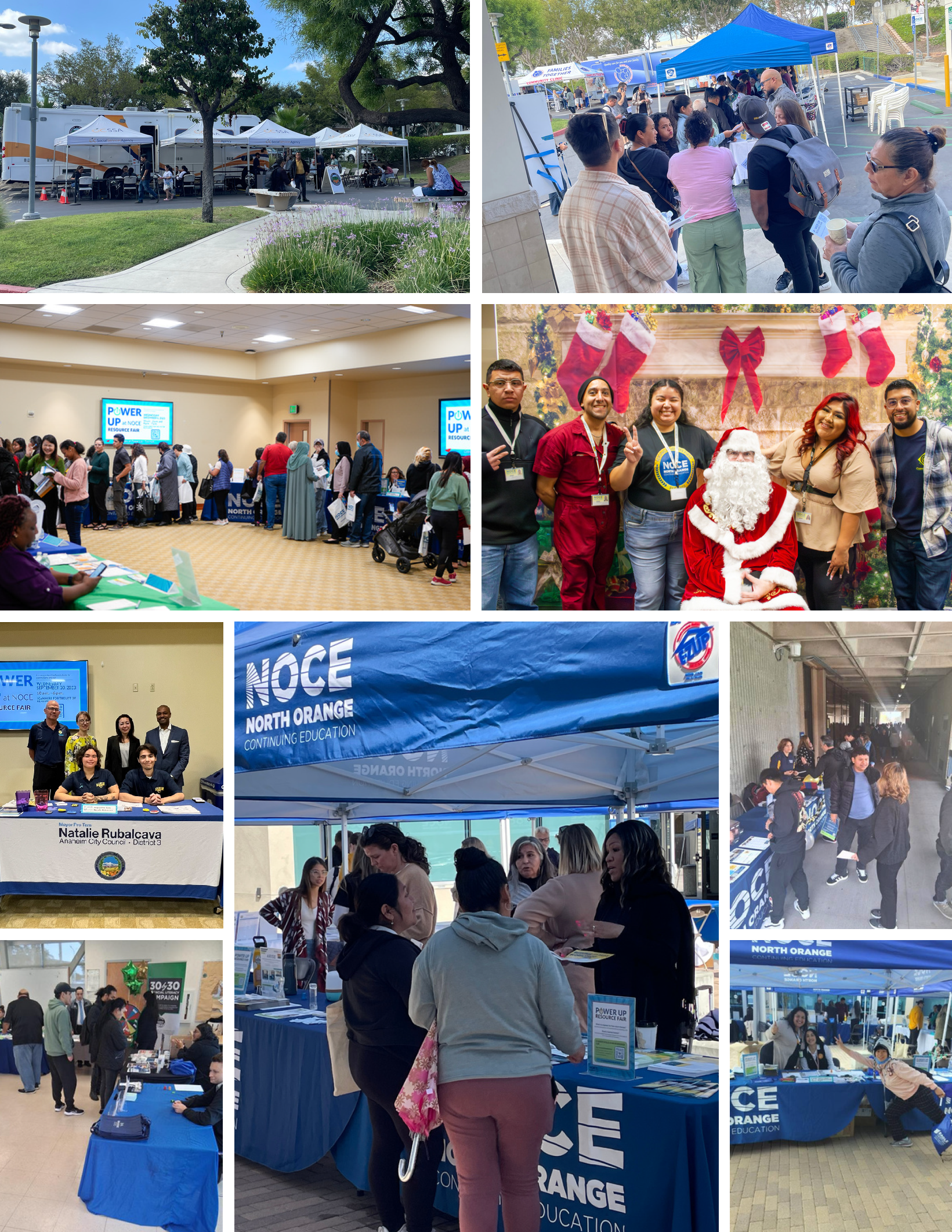
Tables were set up in a resource fair style and held for several hours during the day as well as the evening to meet both day and nighttime students. Each instructional program and each student service office hosted an individual table in order to showcase the full breadth and scope of their department. This allowed students and community members to see all that is available through NOCE via instruction and student support.
For example, the initiative intentionally integrates:
- CTE program exploration
- ESL pathways and support
- Adults with Disabilities resources
- Career, Learning Resource Centers, and Labs
- Academic counseling
Additionally, as a noncredit, standalone institution, NOCE does not have resources such as medical or health services, and a variety of other things. Therefore, community partner services were also invited to showcase resources and oftentimes offer services right on the spot, such as medical, dental, vision, vaccines, diaper and food distribution, and more. Access to government programs for low-income students, such as insurance, food programs, and free cell phones/iPads, was also present. By including a dozen partners at each event, they, in turn, also promote the event and invite their clients to attend.
The event series targets adult learners needing additional support, access, digital assistance, and connection to community and campus resources. This approach ensures that students from all program areas can access the tools they need to succeed without navigating multiple offices or systems.
The series became so popular and so involved that the Career Technical Education Program asked to partner with Power Up to collaborate on a joint Power Up and Career Fair event in order to strengthen coordination, logistical execution, partner participation, and attendance by students and community members. This event was so successful, with over 400 attendees, multiple interviews and job offers, and free lunch and free career-based and community-resource workshops for the attendees. Partners are already asking when they can reserve their spot for next year's event.
The Unique Features of the Program
Unique Features of the Program: The Power Up initiative is distinguished not only by its student‑centered design but also by the depth of leadership engagement and community collaboration that drives its success. Several features set Power Up apart as a model of innovation and institutional alignment:
Senior Leadership Engagement: Executive‑level support ensures that Power Up is strategically aligned with NOCE’s mission and priorities. Senior leaders actively participate in events, reinforcing the institution’s commitment to student access, belonging, and success. The managers/directors/deans of programs support the participation and ensure programs are represented throughout each event. These events are institutional priorities.
Board of Trustees Partnership: The Board’s involvement elevates the visibility and credibility of the initiative. Their presence demonstrates governance‑level endorsement and highlights Power Up as a priority for institutional advancement and community impact.
Student Trustee Representation: The participation of the Student Trustee ensures that the student voice remains central to the initiative. Their engagement strengthens the connection between student leadership and campus-wide efforts to enhance engagement and support.
Community Stakeholder Collaboration: Power Up brings together local organizations, service providers, and community partners who play a vital role in expanding access to resources. Their involvement enhances the breadth of support available to students, their families, and community members.
Elected Officials: Key elected officials, including city mayors, city councils, senator and assembly offices, supervisors, and key leadership from workforce development boards, chambers, and more were often invited to take part or serve as a guest, increasing visibility for NOCE as well as our student population's needs and opportunities.
Cross‑Program and Institutional Integration: CTE, ESL, HS/BS, and Adults with Disabilities programs collaborate seamlessly, creating a unified experience that reflects the diversity of NOCE’s student population. Promotion of transition is also present between fellow colleges within NOCCCD, with credit colleges Cypress and Fullerton outreach teams always hosting tables at these events.
Belonging‑Centered Design: Every Power Up event is intentionally crafted to foster connection, confidence, and a sense of community among students, their families, staff, community members, and partners. Each event is unique and offers a variety of features such as student clubs hosting tables, campus tours, workshops with community partners, and even a visit from Santa during the holiday Power Up event, where students could take photos with the main man!
Barrier‑Reducing Access: By bringing academic support, wraparound services, and community resources directly onto campus, Power Up eliminates logistical barriers and ensures equitable access for students and community members
Implementation
- Outreach through Canvas, text messaging, email newsletters, flyers and posters, faculty announcements, visits to classrooms by staff and student ambassadors, social media posts, and a dedicated webpage.
- Activities, workshops, themes, and needs are intentionally planned and scheduled at varied times to accommodate working adults.
- Integrated into strategic and intentional onboarding pathways for new students.
- Attendance tracked through registrations, sign‑ins, and compass cards
Together, these features demonstrate how Power Up leverages leadership, governance, student voice, and community partnerships to create a comprehensive, high‑impact engagement model.
The Outcome
Outcomes & Supporting Data
Early outcomes demonstrate that Power Up is strengthening engagement and expanding access:
- Increased student participation across CTE, ESL, HS/BS, and AWD programs
- Higher awareness of free NOCE classes, certificates, programs, and services
- More referrals to counseling, career services, and community partners
- Positive student feedback highlighting increased belonging and confidence
- Growth in family engagement, especially among ESL and AWD households
Power Up aligns with consortium, strategic, and accreditation goals by:
- Expanding access to adult education and career pathways
- Strengthening collaboration across program areas
- Increasing visibility of local, regional, and statewide services and support systems
- Enhancing community partnerships that benefit students, their families, and community members
Power Up directly advances key CAEP statewide priorities:
- Equity: By bringing services directly to students and families, Power Up reduces access barriers and supports historically underserved populations. Activities/Sessions offered in multiple languages or with language support when possible. Materials designed with universal design principles for accessibility.
- Leadership: Power Up demonstrates NOCE’s leadership in the adult education field by implementing an innovative, student‑centered model that meets adult learners where they are. The initiative serves as a replicable framework for other institutions seeking to enhance engagement, retention, and completion through integrated on‑campus services. NOCE models a data-informed, proactive, student‑centered approach that other adult education providers can replicate.
Marketing & Outreach: Power Up increases the visibility of NOCE programs and services, strengthening community awareness through high‑impact campus engagement, connecting students, their families, and community members directly with resources. The initiative strengthens and promotes program pathways and supports informed decision‑making across the District and community.
Power Up exemplifies innovation in adult education by creating a welcoming, accessible, and community‑centered experience that supports students and community members across all NOCE programs: CTE, ESL, HS/BS, AWD, and the institution.
The initiative is:
- Replicable
- Scalable
- Inclusive
- Impactful
Power Up demonstrates how intentional engagement can transform campus culture and expand access for adult learners and their families.
Attendance: Approximately 400 participants would attend each 4-hour event. These events were held approx. 3 times per year, either before each semester or at the mid-term point, to boost “late-start” classes. Nearly 30 institutional and community partners would attend each session to showcase programs and services.
Continuous Improvement:
- Data‑driven refinement using attendance trends, student surveys, and community partner/faculty input.
- Annual review of workshop topics to align with emerging student needs.
- Expansion of partnerships with Workforce Development and community organizations.
- Plans to integrate micro‑credentials or digital badges for workshop completion